
Which AWD feels more confident for daily driving around Milwaukee WI — S-AWC on Eclipse Cross or Subaru Symmetrical AWD?
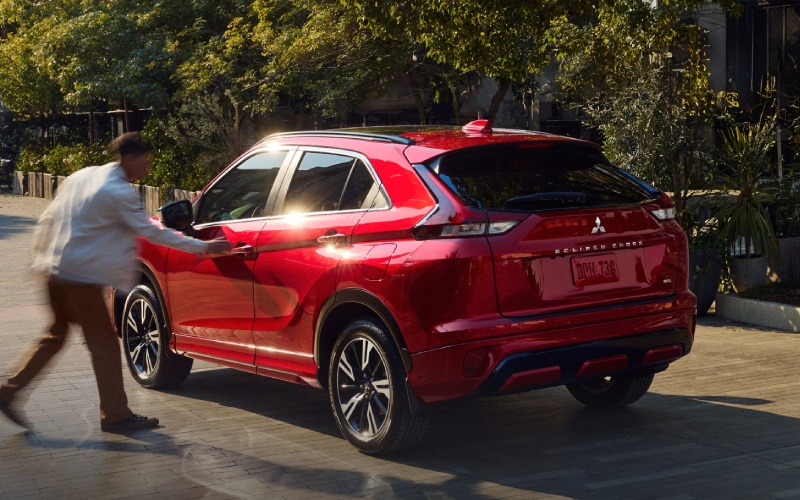
Russ Darrow Waukesha Mitsubishi – Which AWD feels more confident for daily driving around Milwaukee WI — S-AWC on Eclipse Cross or Subaru Symmetrical AWD?
What this comparison means for real-world driving
When shoppers search for compact SUVs that handle unpredictable Midwest weather and daily highway commuting, two names rise to the top: Mitsubishi’s Super-All Wheel Control and Subaru’s Symmetrical All-Wheel Drive. Both deliver excellent traction. The most common question we hear is simple but important: which system feels more confident for day-to-day driving around Milwaukee WI, and why? We’ll break down how each one works, where the hardware and software make a difference, and what you might feel on your test drive.
Let’s start with how both systems approach traction. In the 2026 Mitsubishi Eclipse Cross, S-AWC coordinates front-to-rear torque distribution with advanced yaw control and brake-based torque vectoring. Paired with selectable drive modes—Normal, Snow, and Gravel—S-AWC adapts to the surface and your inputs, helping you get predictable, secure responses even when the pavement gets slick or uneven. Subaru’s Symmetrical AWD delivers balanced, full-time traction with a low center of gravity thanks to its SUBARU BOXER engine layout. Many Crosstrek trims offer X-MODE (and dual-function X-MODE on specific models) to tailor power and braking to low-traction surfaces. On paper, both systems inspire confidence, but the Eclipse Cross stands out by making S-AWC standard on every trim, so you get the same traction philosophy and software logic whether you choose ES or SEL.
How it feels pulling away, merging, and changing lanes
From the driver’s seat, the Eclipse Cross’s turbocharged 1.5-liter engine delivers torque early, so it steps off cleanly from a stop and merges with an easy, smooth surge. The CVT and available paddle shifters complement S-AWC’s traction management, giving the Eclipse Cross an unflustered character during quick lane changes or on-ramp acceleration. In a Crosstrek, the 2.5-liter engine’s output is solid and the standard Symmetrical AWD is steady and predictable; X-MODE helps in slippery spots, especially at lower speeds. In day-to-day terms, both are confident, but the Eclipse Cross combines turbo torque with S-AWC’s mode logic to make acceleration and mid-corner corrections feel particularly composed during busy commutes and crowded interchanges.
Handling nuance also comes through at neighborhood speeds. On damp or salted surfaces where grip varies block by block, S-AWC’s subtle brake control and yaw management help the Eclipse Cross track cleanly without demanding frequent steering corrections. The Crosstrek’s balance is also commendable; its AWD layout is a Subaru hallmark for good reason. The distinction many drivers notice is the Eclipse Cross’s predictive, almost “pre-settled” feel when conditions are mixed—like parking lot slush at lunchtime followed by dry, windy pavement for the drive home.
Confidence features that make daily life easier
Traction is the headliner, but everyday confidence is also about visibility and convenience. The Eclipse Cross offers an available Multi-View Camera System on SEL, which gives a bird’s-eye perspective when maneuvering in tight downtown ramps or crowded lots. An available Handsfree Power Tailgate and power folding side mirrors make running errands simpler, particularly when space is tight. The SE Pano S-AWC trim adds a panoramic roof for an open, airy cabin feel. Crosstrek drivers will appreciate the large Subaru 11.6-inch Multimedia System on certain trims, as well as standard EyeSight® Driver Assist Technology that brings strong driver-assistance credentials to every model. Both SUVs offer connected services—Mitsubishi Connect with a 24-month trial (enrollment required) and the availability of MySubaru Connected Services—so remote features and app-based confidence are on the menu either way.
Another often-overlooked advantage for daily comfort is seat adjustability. The Eclipse Cross SEL makes an 8-way power-adjustable front passenger seat available—an unusual perk in this segment that helps both front occupants settle in for longer trips. That’s on top of the 8-way power driver seat and available leather-appointed seating, which add a premium touch without complicating your routine. These thoughtful touches, paired with S-AWC’s always-on traction strategy, help the Eclipse Cross feel built for busy lives and variable conditions.
When weather turns and roads get messy
Winter storms, spring downpours, and leaf-slicked autumn mornings all put traction systems to the test. Around highway on-ramps, elevated interchanges, and multi-lane merges, S-AWC in the Eclipse Cross continuously modulates torque and braking to help you feel settled and in control. The Snow mode’s programming calms throttle response and optimizes power distribution, so it’s easier to drive smoothly instead of chasing corrections. Subaru’s Symmetrical AWD with X-MODE is also strong in low-traction scenarios. Wilderness models raise the bar with more ground clearance and trail-focused tires, which are excellent if your routine includes frequent unmaintained paths. For most drivers commuting on paved roads with occasional messy stretches, Eclipse Cross’s standard S-AWC mapping and turbo torque create a confident, relaxed rhythm that’s easy to live with.
Which should you choose?
If you prioritize confident traction on paved roads, smooth turbocharged torque, and everyday conveniences like a surround-view camera system, power folding mirrors, and an available Handsfree Power Tailgate, the Eclipse Cross stacks up as the more refined daily driver. If you’re leaning into frequent trail use, the Crosstrek Wilderness configurations add hardware that speaks to those adventures. For a majority of shoppers who want year-round assurance, comfortable commuting, and modern tech that simplifies life, the 2026 Eclipse Cross brings a compelling balance right out of the box.
Quick takeaways
- Traction philosophy: S-AWC is standard on every Eclipse Cross trim and uses drive modes, brake control, and yaw management to help you feel settled on variable surfaces.
- Daily drivability: Turbocharged torque in the Eclipse Cross delivers smooth, early response for stress-free gaps and merges; Crosstrek’s steady balance is also reassuring.
- Everyday visibility and convenience: Eclipse Cross offers an available Multi-View Camera System, power folding mirrors, and a Handsfree Power Tailgate to simplify tight-space tasks.
- Interior comfort details: Available leather-appointed seating and an 8-way power passenger seat on Eclipse Cross SEL elevate long-drive comfort.
Frequently Asked Questions:
Is S-AWC always active on the Eclipse Cross or only in certain modes?
S-AWC is always managing traction, and you can tailor its behavior with Normal, Snow, and Gravel modes to match conditions.
Does the Crosstrek have a similar surround-view camera?
Crosstrek models offer a rear-view camera, but a 360-degree Multi-View Camera System like the Eclipse Cross SEL is not offered.
Which model’s AWD is better for mostly paved commuting with occasional messy roads?
Both are capable, but the Eclipse Cross’s standard S-AWC with mode tuning and turbo torque creates a composed, easygoing feel that many commuters prefer.
Wherever you’re headed, it helps to compare these systems back to back. Stop by Russ Darrow Waukesha Mitsubishi—serving Milwaukee WI, Madison, and Racine—to test-drive both traction approaches on local roads and feel the difference in steering responses, throttle mapping, and low-speed maneuvering. One route usually makes the answer clear.
0 comment(s) so far on Which AWD feels more confident for daily driving around Milwaukee WI — S-AWC on Eclipse Cross or Subaru Symmetrical AWD?